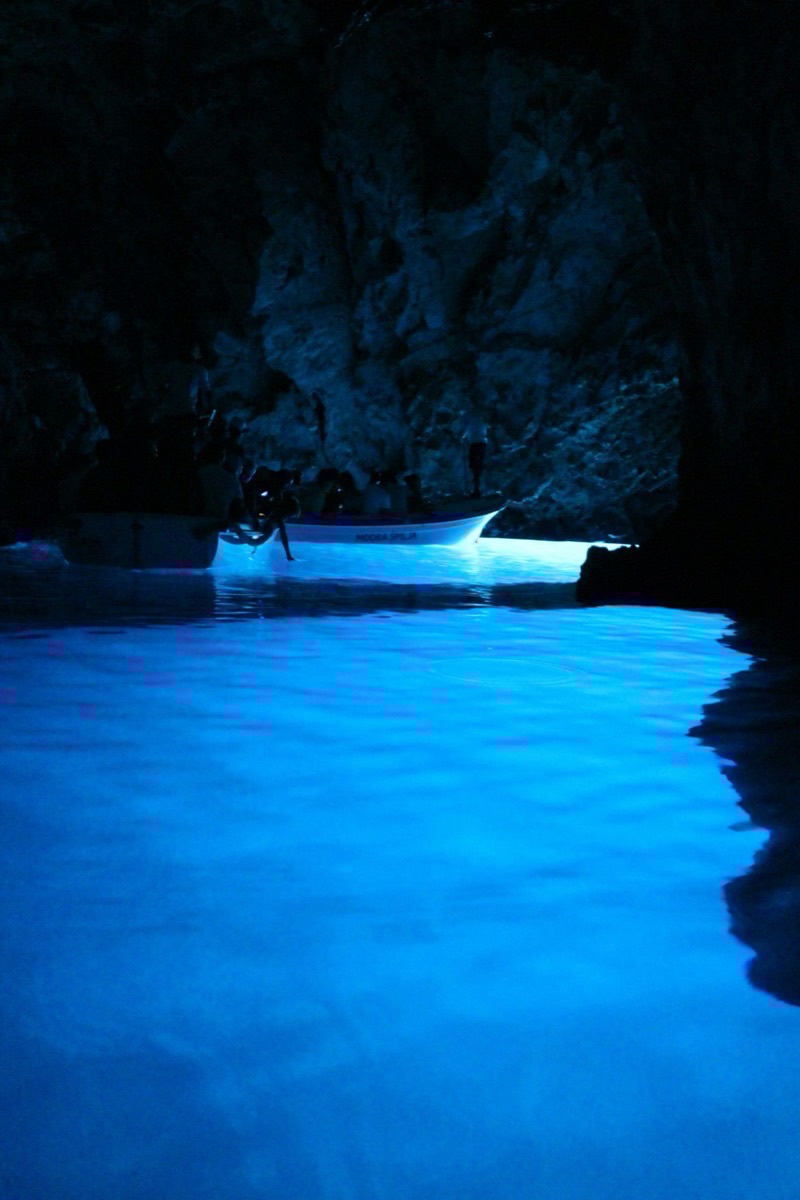
The Blue Cave (Modra špilja) on Biševo island is one of the most photographed natural phenomena in Croatia, a sea cave where sunlight enters through an underwater opening and refracts into a blue glow that illuminates the interior. It is a genuine spectacle, but it requires planning.
Location and accessBiševo island is the westernmost inhabited island in Croatia, located 5 km southwest of Vis island. The cave entrance is on the northeastern shore of Biševo at Balun Bay. Access is by small motor dinghy from a waiting area. The cave mouth is too small for a full-size boat. Your boat anchors at Balun Bay and the skipper arranges dinghy transfers into the cave.
From Split, the distance to Biševo is approximately 70 km by sea. Direct route by motorboat: 2.5 to 3 hours depending on sea state and boat speed. The standard full-day Blue Cave tour from Split adds Vis island town (Komiža port lunch) as a second stop, making the full-day a 9-hour excursion.
Inside the caveThe cave interior is approximately 24m long, 12m wide, and 11m high at the peak. The blue light effect is most intense between 10:00 and 12:00, when the sun angle is right for the underwater reflection. Outside this window, the effect is less vivid. The cave is still visually interesting but does not have the same blue glow.
Entry is by dinghy, 2 to 4 persons per dinghy, with a brief guided explanation from the dinghy operator. Time inside the cave per group is approximately 5 to 8 minutes, long enough to photograph and appreciate but not long enough to explore. Swimming inside the cave is permitted but cold water (18-20°C in summer) and the brief entry window make it more symbolic than practical.
Cave entry fee: €20 per person, paid at the Balun Bay waiting area. This is separate from any boat charter cost.
The waiting systemAccess to the cave is managed by a cooperative of local dinghy operators from Biševo village. There is a queue system. In peak season (July-August), the wait at Balun Bay can be 45 to 90 minutes. The dinghy operators have a daily quota and stop taking new boats when the queue becomes too long.
This means: arrive at Balun Bay before 09:30 if possible. A departure from Split at 06:00 to 06:30 reaches Biševo by 09:00. This is a genuinely early start that many guests balk at but appreciate by 10:00 when they are inside the cave ahead of 30 other boats.
When not to goThe cave access depends on sea conditions. The dinghy transfer requires calm water at the cave entrance. When the sea is even mildly rough, the entrance passage is dangerous and the cave closes. The Biševo coast is exposed to SW swell, which is the dominant direction for storms on the Adriatic.
The cave is closed:
- When SW wind exceeds 3 Beaufort (approximately 12 knots / 22 km/h)
- When swell height at the entrance exceeds approximately 0.4m
- During and after significant weather events (the cave may close for 1-3 days after a storm even when winds calm)
- November through March (limited access, minimal dinghy operation)
We check the forecast and sea state the day before. If conditions are uncertain, we discuss rescheduling options. The cave closes on approximately 10-15% of days in peak season.
Vis island town and KomižaVis island itself is the least developed of the inhabited Dalmatian islands, foreign tourism was limited until 1989 when the island was removed from Yugoslav military exclusion. Komiža, on the western shore, is a working fishing port with one of the best seafood restaurants per capita of any Dalmatian island town. Lunch at a konoba in Komiža after the cave visit is one of the better meals available on a day-trip Adriatic itinerary.
The island interior is also notable: the valley road from Vis town to Komiža passes through abandoned military infrastructure from the Cold War period (tunnels, submarine pens) and through vineyards producing Vugava, a dry white wine grown only on Vis.