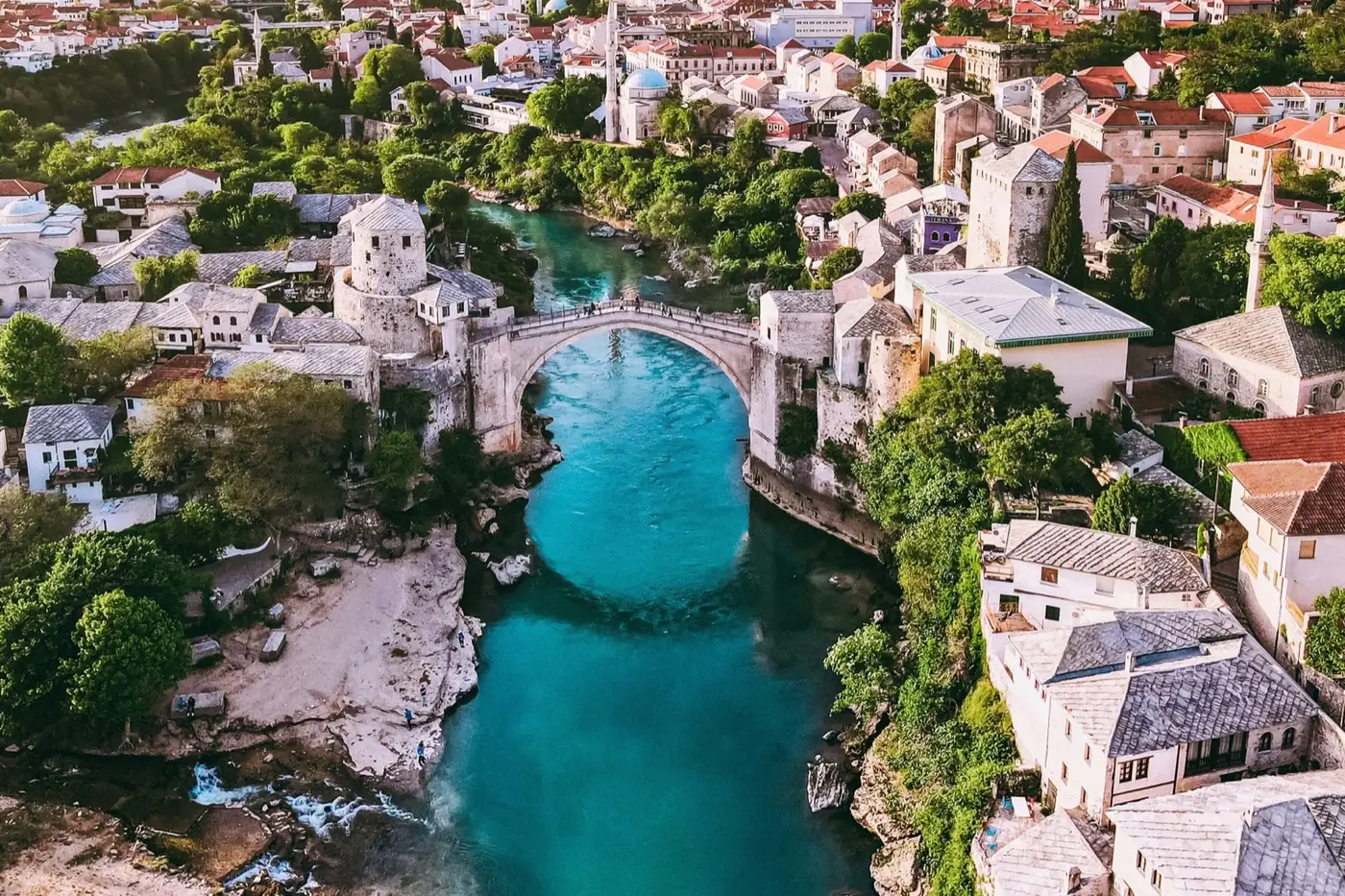
Mostar is the most visited city in Bosnia and Herzegovina and one of the most compelling day trips from Split despite the border crossing. The famous Stari Most, the reconstructed 16th-century Ottoman bridge over the Neretva, is worth the drive.
Distance and driveMostar is approximately 180 km from Split via the A1 motorway to Bjelave interchange, then the D1/E73 road through Livno, or via the coastal route E65 south to Metković, then the M17 north through the Neretva valley. The coastal route via Metković is 30 km longer but more scenic and avoids mountain road driving. Travel time: 2 hours 30 to 2 hours 50 minutes without stops.
The border crossingCroatia has been fully Schengen since January 2023. Bosnia and Herzegovina is not in Schengen and not in the EU. The crossing at Kamensko (between Metković and Čapljina) is the main entry point for this route.
Document requirements:
- EU/EEA passport or national ID card: admitted without visa for up to 90 days
- UK passport: admitted without visa for up to 90 days (post-Brexit bilateral agreement with BiH)
- US, Canadian, Australian passport: visa-free for up to 30 days
- All passengers must carry the document they used to enter Croatia
Standard crossing time on a weekday is 10 to 25 minutes. On summer weekends (Friday evening and Sunday afternoon), crossing times can reach 45 to 90 minutes in each direction. We plan the Bosnia itinerary to cross the border on return before 15:00 to avoid the weekend afternoon peak.
Mostar's old town layoutThe historic centre is compact. Stari Most (the bridge) is the geographic centrepiece. It connects the former Christian neighbourhood of Kujundžiluk on the east bank with the Muslim neighbourhood on the west bank. The main bazaar street (also called Kujundžiluk) runs from the bridge approach east into a pedestrianised market.
Key stops:
- Stari Most itself: walking across takes 2 minutes. Standing at either end for photos is the expected activity. The bridge is slippery, rubber soles essential. Divers jump from the bridge in summer, a tradition with an associated competitive dive club.
- Kujundžiluk bazaar: 300m of covered market selling copper items, textiles, and standard regional craft. Quality varies; the copper coffee sets and handmade items near the mosque are higher quality than the souvenir shops.
- Koski Mehmed-Pasha Mosque (€4 entry, tower access included): a 17th-century mosque with a good minaret view of the bridge
- War Photo Exhibition: documents the 1992-1995 war in Mostar. Entry around €4. Sobering and informative; recommended for adults interested in the recent history.
Mostar's climate is sub-Mediterranean but continental. Summer temperatures in July and August regularly reach 38-42°C in the old town. The narrow stone streets trap heat. Arrive at the bridge before 11:00. Find a shaded restaurant or café facing the river from 13:00 to 15:00.
Lunch recommendationThe restaurants immediately on the bridge approach charge tourist prices with mediocre food. Walk 200m north of the bridge to streets away from the main bazaar. Restaurants charging €8-12 for a main course exist within a 5-minute walk of Stari Most. Local grilled meat (ćevapi), burek pastry, and Bosnian coffee are the local options.
MeđugorjeMeđugorje is 25 km southwest of Mostar on the return route toward Split. It is a Catholic pilgrimage town following reported apparitions of the Virgin Mary beginning in 1981. Regardless of religious affiliation, it is a functioning active-pilgrimage destination with around 1 million visitors annually and a specific built character unlike anywhere else in the region. The walk up Apparition Hill takes 30 minutes. A brief stop on the return leg adds 1 hour to the day.